
And their slow demise …
Postcards were always part of a holiday when I was growing up. As children, we chose them from stands outside village grocery or rural Post Office shops. I would choose Scottish lochs or fishing boats for Granny and aunties or maybe a West Highland brown cow with amazingly curly long horns.
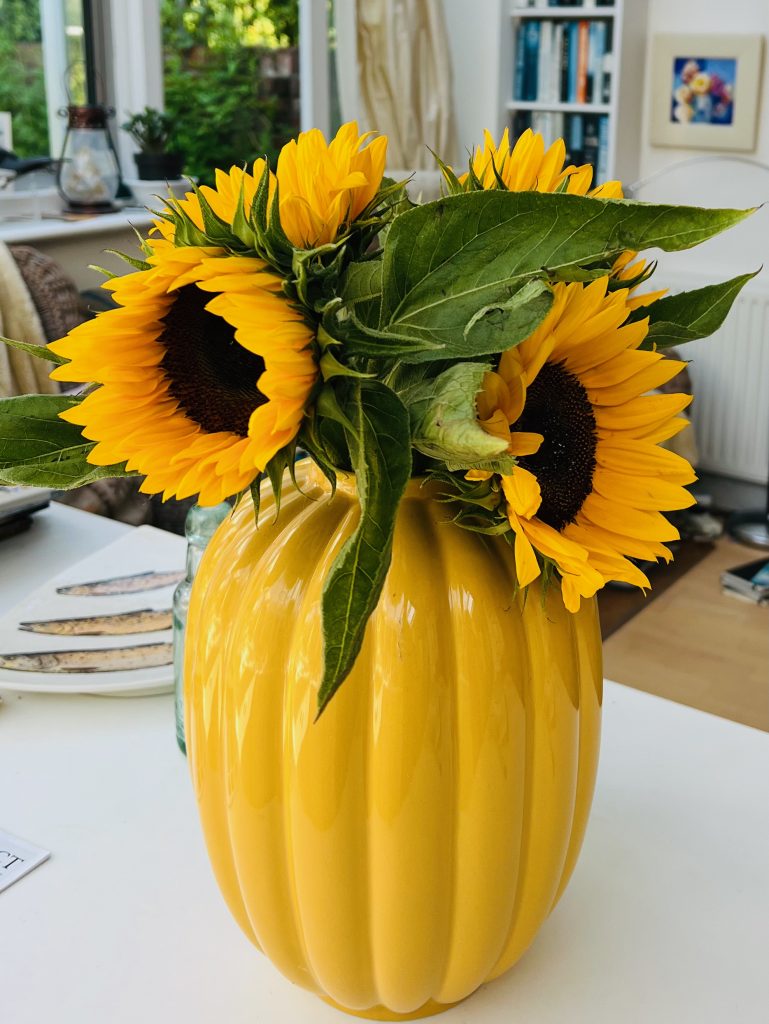
Something for others – a white sandy beach, tempting Scottish-Italian ice cream cones from Forte, a bottle of Irn-Bru. Moving on to a glamorous café liégeois, a French baker holding up a ‘tarte tatin’, croissants with coffee or a hot chocolate, a bottle of wine, a French man ‘sur biciclette’, sunflowers, orange groves, a volcano spewing out lava, or even that castle we had to climb up to in the searing heat of the day or famous buildings like the Eiffel Tower for things historical and cultural.
The cards sent from France came later, when we had acquired a car and our own small children to entertain. You could take the ferry or hovercraft across the Channel and load the car with its GB sticker onto a train at Calais or Boulogne. We slept fitfully in our couchettes as the train raced through the night to Brive-la-Gaillarde near the Lascaux caves in the south west. We woke up to the shouts and clatter of French youths, revving up our cars as they successfully drove them off the train – and minutes later, we were surrounded by silent fields of sunflowers – tournesols … heaven …
Once, in Italy, I had written my cards and put them in what I thought was a post box. Nobody received them. Six months later they all turned up – slightly dog eared at the edges. Some kind person had obviously found them as they languished in spiders’ webs at the bottom of a ‘not’ postbox and sent them on their way!
It was always exciting to get a postcard from ‘foreign parts’! with the possibility that I might even go there myself one day. Some of these postcards I still find in old books on our shelves, used as bookmarks.
Then it was ‘gap years’ after university. Postcards were sent home mainly to calm down parental anxiety as second hand cars bursting at the seams zoomed across the Channel into continental Europe. Joy! No mobile phones, no internet – using a phone box abroad would only be for emergencies.
My own experience was driving to Greece – through France and Italy and back via (then) Yugoslavia, Germany, Austria and Switzerland two months later. We all slept in the old open Land Rover with its canvas roof, lent by a generous parent.
But the arrival of the Internet, where you can conjour up photos of places, people or just something that appeals – in a matter of moments – has demoted the whole postcard experience. Plus the price of postage itself has rocketed as costs for a stamp mean they should at least contain a mini gold bar. Postage delays are now the norm too. Snail mail has – sadly – had its day. I still buy postcards though, when I can find them – bookmark memories for the future? It’s hard to let go of habits of a lifetime!
I’m a little behind with my blogs … I had a good idea … shorter ones … ?
Instead of describing my latest travels in detail I’ve decided to do a postcard of each, including the best – and sometimes the worst – of a trip. So here I go …
First stop, CORSICA
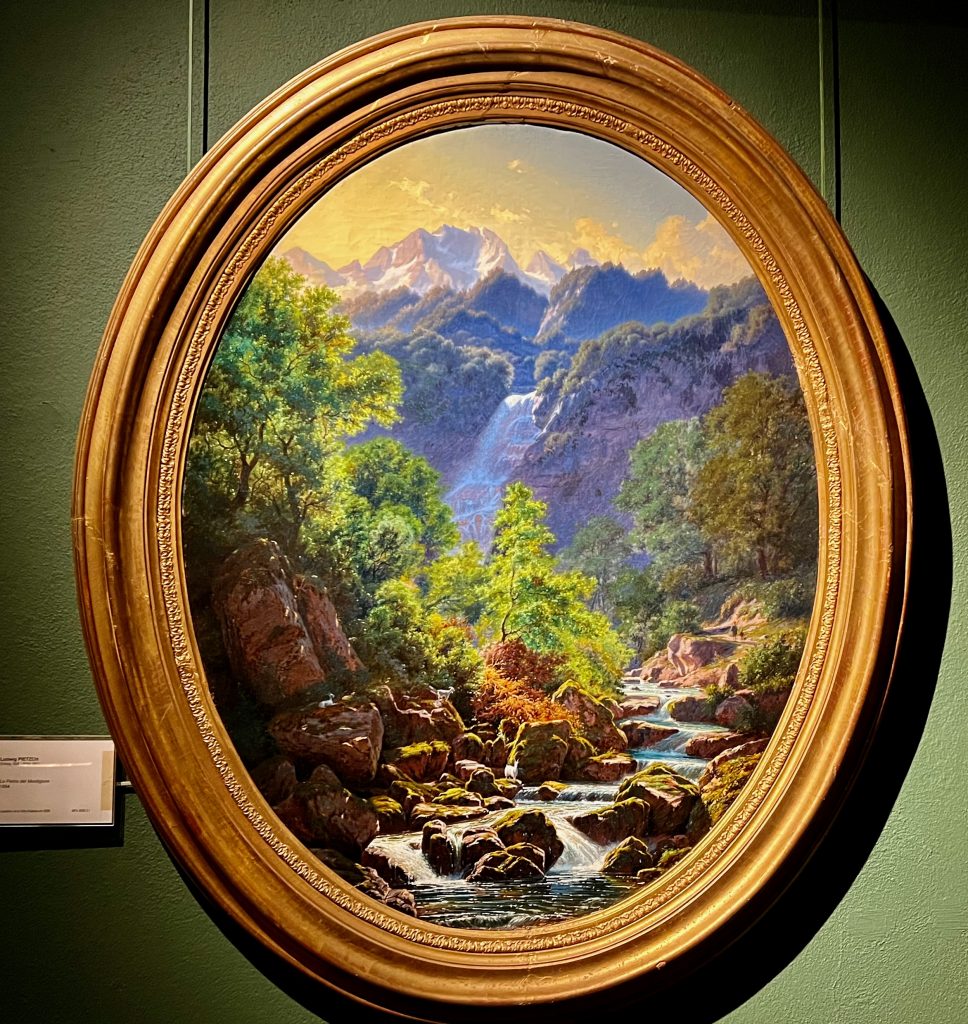
Corsica is beautiful in a savagely feral sort of way. It has managed to keep typical tourist resorts at bay because of its terrain. The roads ‘racersnake’ along the coastline, vertiginously sinuous, with long, dramatic drops to the sea. Inland, roads are scarce, losing themselves in thickly forested mountains, inhabited by wild boar. For me, it’s worth the effort and the risk.
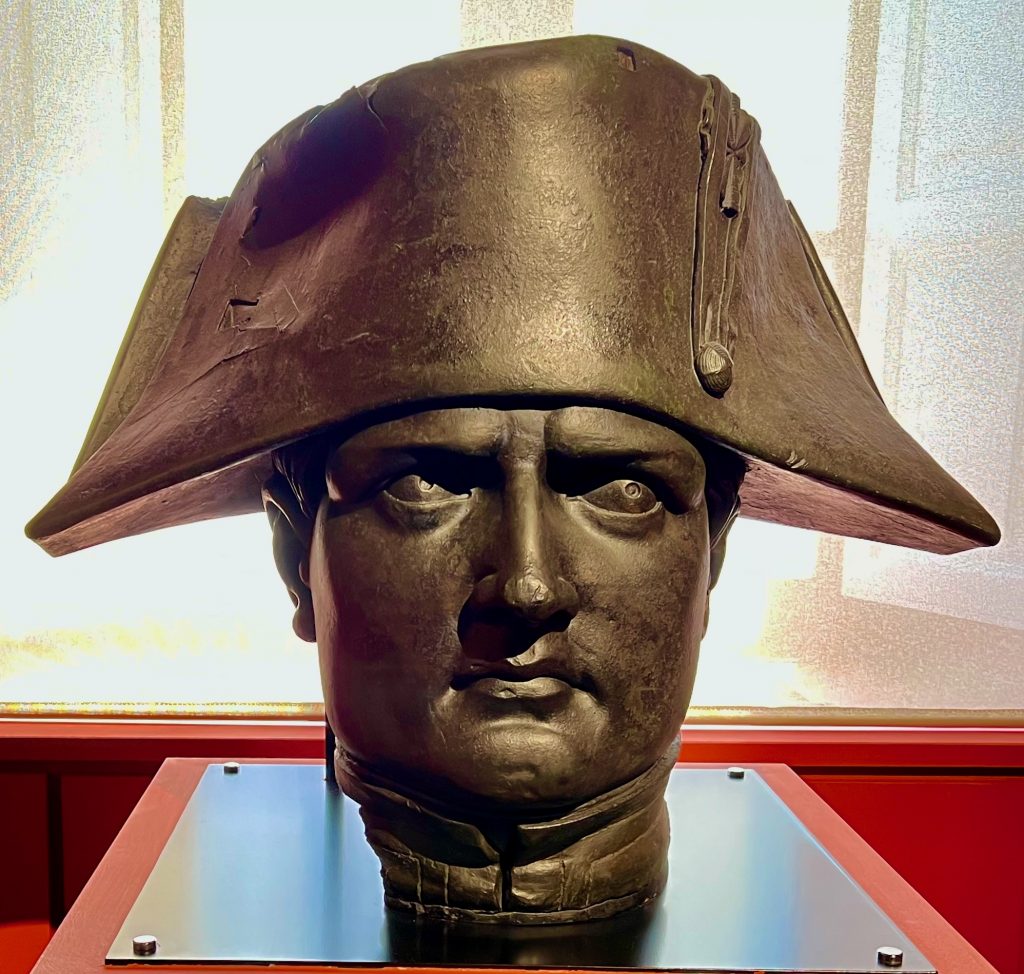
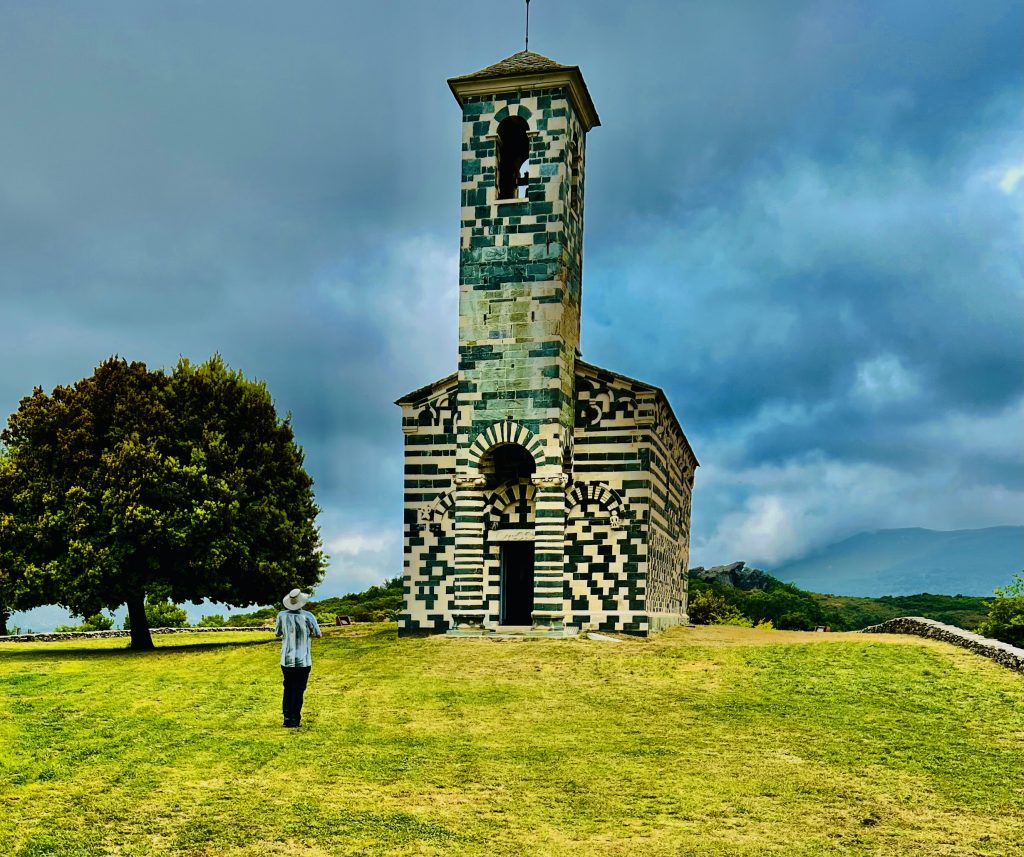
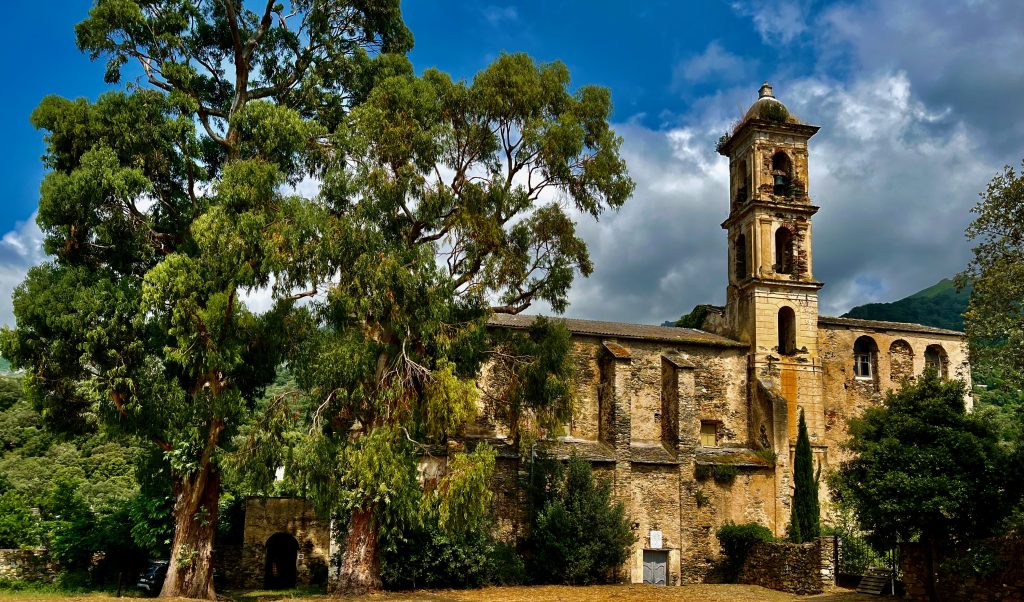
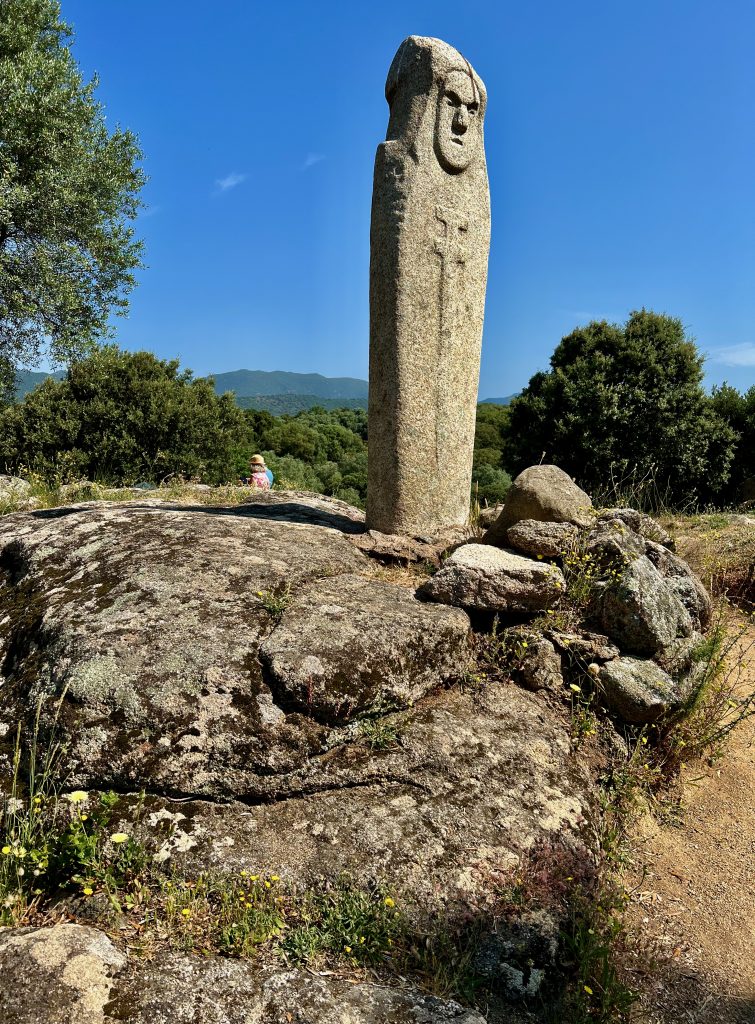
Maybe not a very alluring sculpture of the man but this twelfth century church below, made from limestone and serpentine, is certainly worth seeking out …
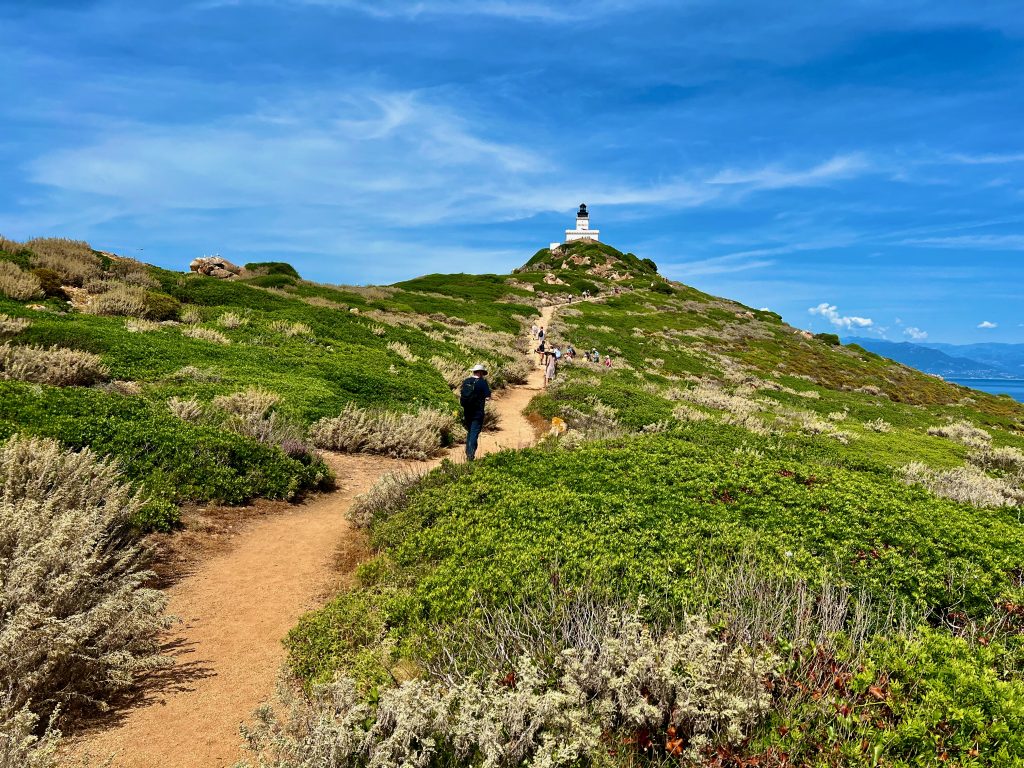
The uninhabited ‘Iles Sanguinaires’ with their lighthouse are easily accessible a few miles from Ajaccio, a half hour trip across the waves in a small ‘foot’ ferry. Take a picnic. Be away from the everyday world, if only for an hour or two and experience paradise …
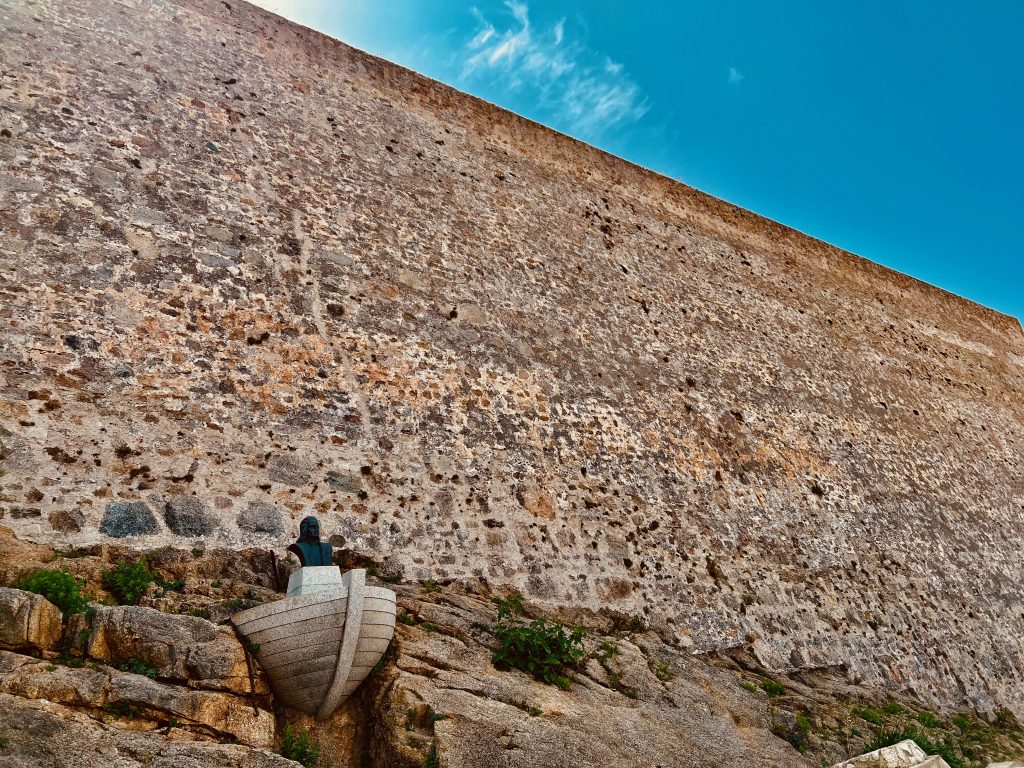
A massive fortress at Calvi pushes its way out into the sea. Corsica has needed to defend itself from various warring hordes over the centuries – like Sicily. And it has – but not always successfully along the way. Today, its individual character is ‘formidable’!
Leaving the coast we plunge next into the green interior, making our way to the main town, Corte. Nearby, a splashing stream rushes along the bottom of the valley. Another hidden paradise – a very special place to stay.
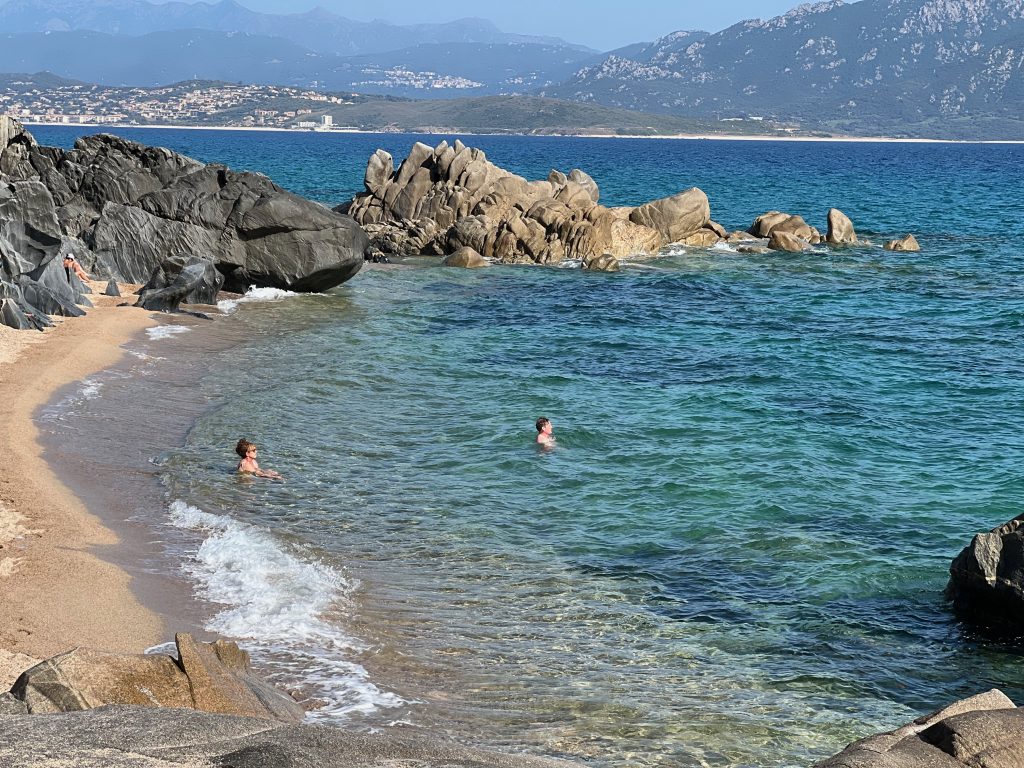
The joy of swimming in the sea – there are many small coves besides long, sandy beaches. Seek them out as you travel round the island.
Dorothy Carrington (1910 – 2002) wrote a prizewinning book about Corsica, published by Heinemann in 1971, called ‘The Granite Island’ amongst her many other publications. She spent over half her life in Corsica, falling in love with it. Her obituary, published in ‘The Guardian’, is a fascinating read. Seek out her gravestone in the magnificent cemetery near Ajaccio.
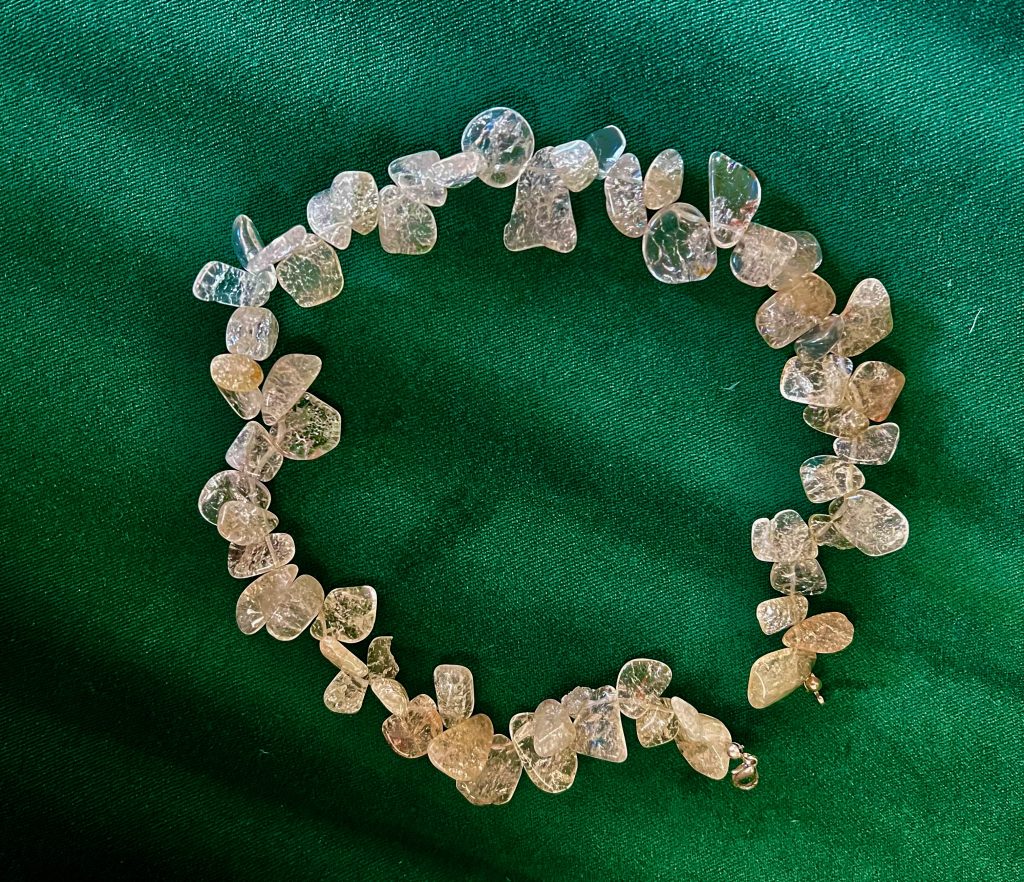
This is our last morning. We have returned to Ajaccio and I see a few stalls set up in the main square – a sort of flea market. I’m attracted by a glass necklace – glass pieces, maybe polished by the sea over the years. I hand over 20 euros and the necklace is mine to cross another sea.
Corsica is definitely an island to be revisited. Make sure you have a safe driver though!
There’s more here than fits on a postcard but I suppose that’s the upside of the Internet – with no stamp needed. But I can’t use it as a bookmark – it’s not even the right shape!
SAINT-GÉNIS DES FONTAINES
My next postcard comes from Saint-Génis des Fontaines via Perpignan. An invitation to spend a few days in a house belonging to a retired film producer.
A train journey from Toulouse to Perpignan, which is a town worth a visit for its picturesque buildings and a walk in the park.
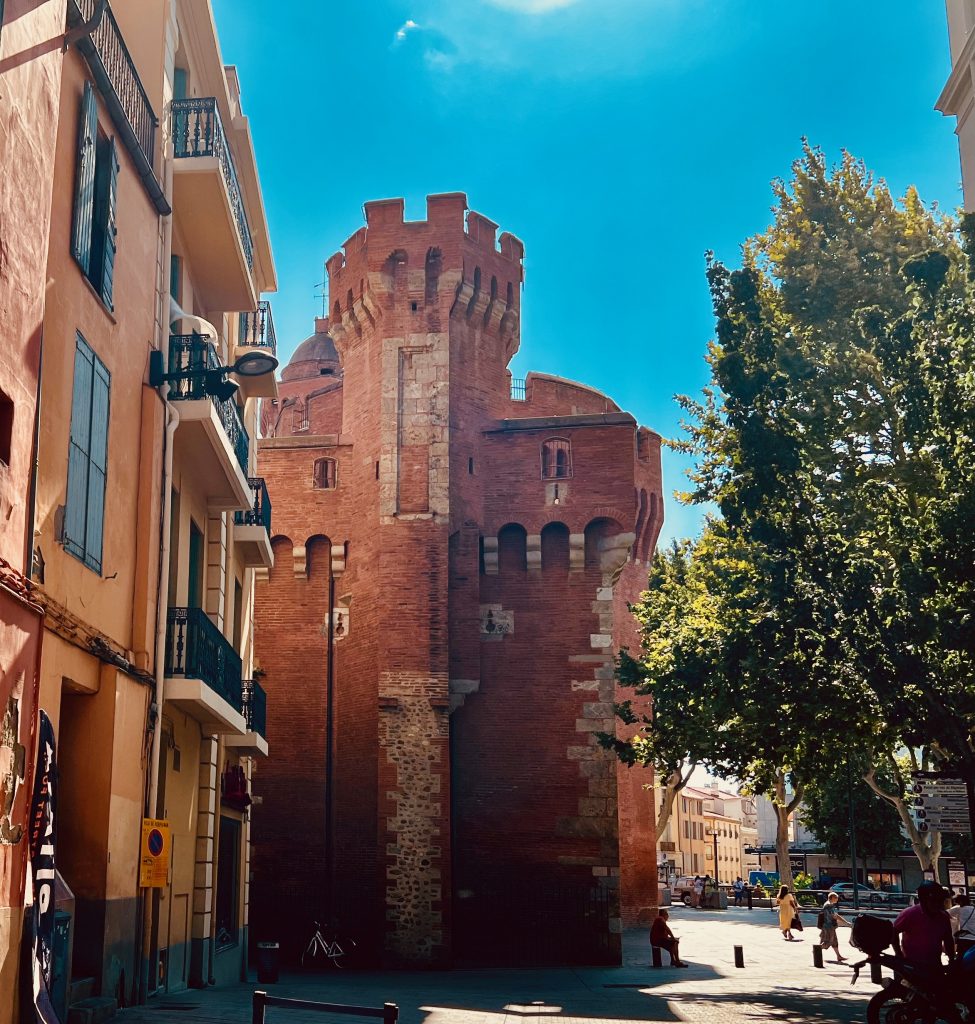
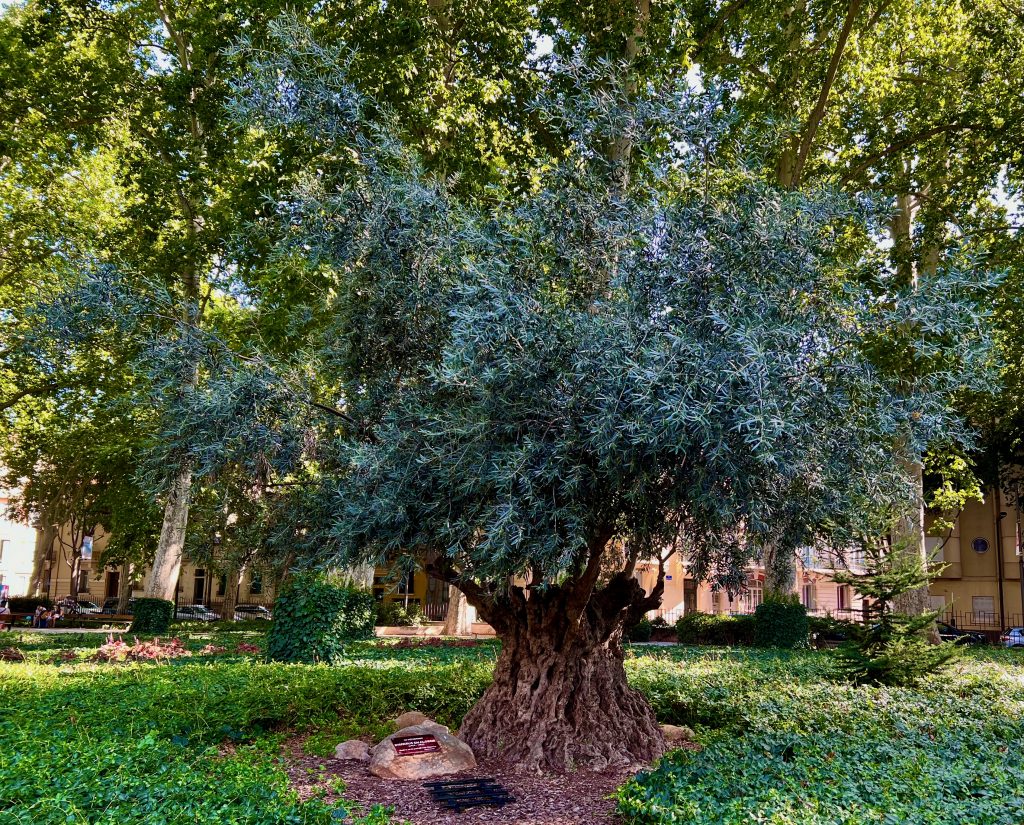

A contemporary art exhibition being staged in the park next to the Dalí Hotel.
I’d like to explore more but we’re off to Saint- Génis des Fontaines early next morning.
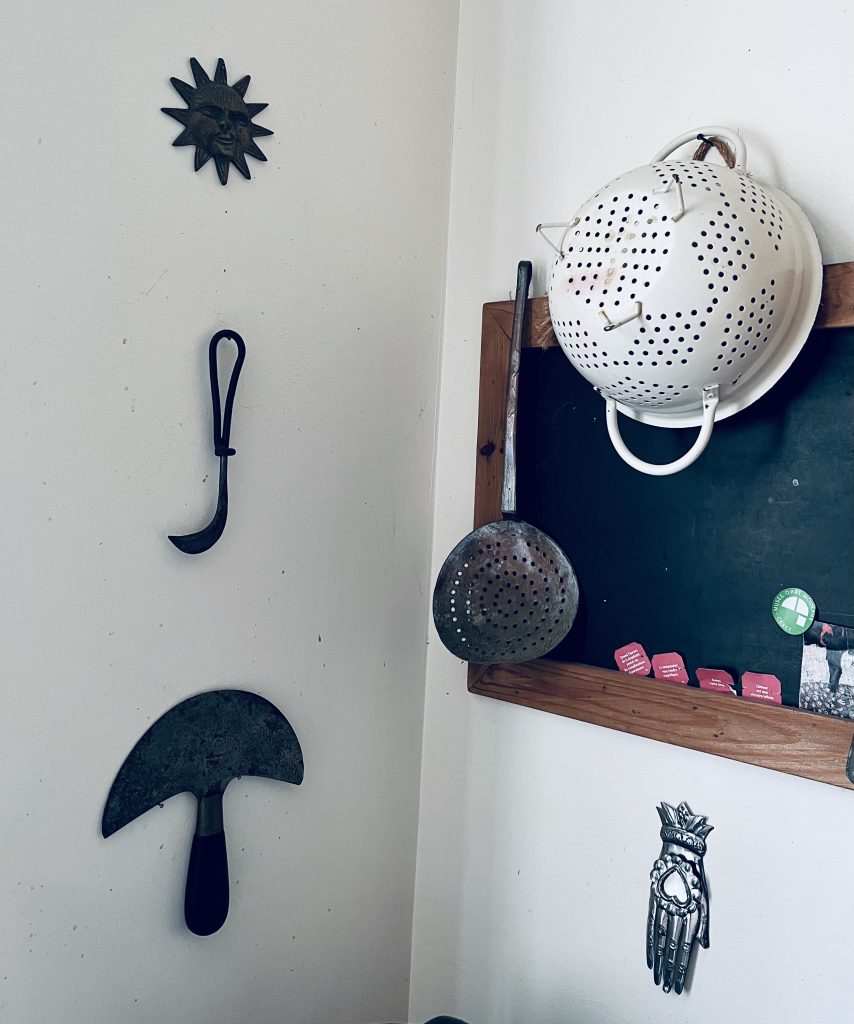
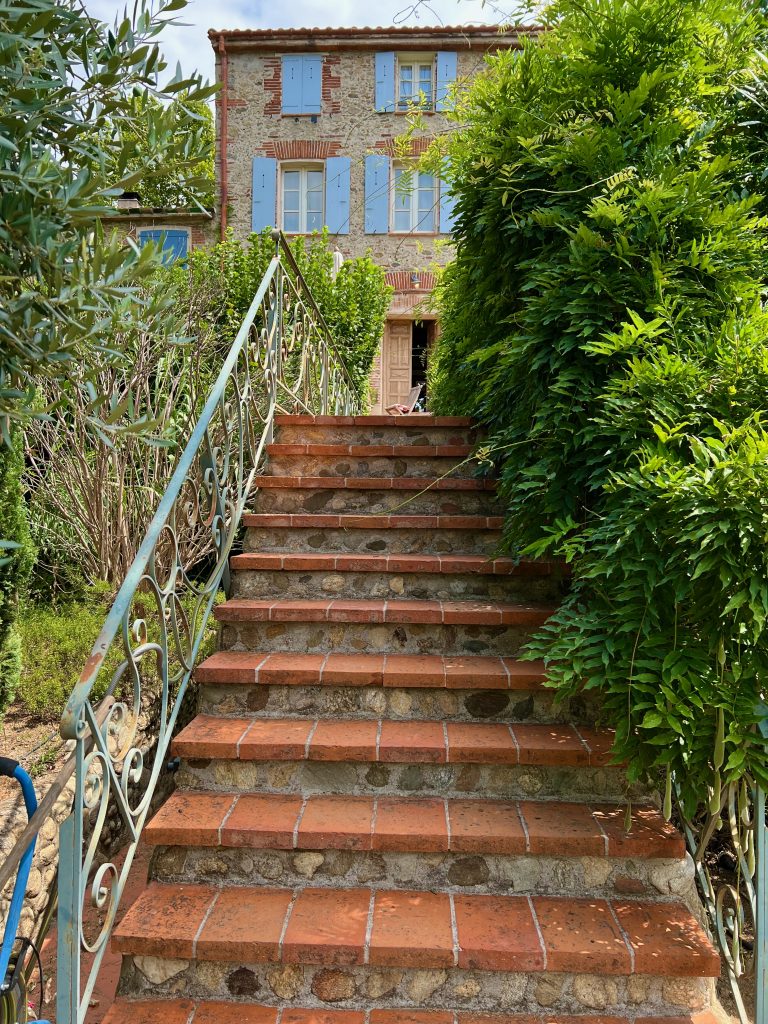
The house is just outside this quiet and charming village. Six minutes walk in the morning to the fabulous ‘boulangerie’. After choosing our breakfast treats we sit outside at the café in the square over a café crême or a ‘chocolat chaud’ before returning for ‘le petit déjeuner’. A marauding cat keeps the birds on their toes as they hunt down crumbs. This is the life of a ‘flâneur’ and I’m relaxed into it already.
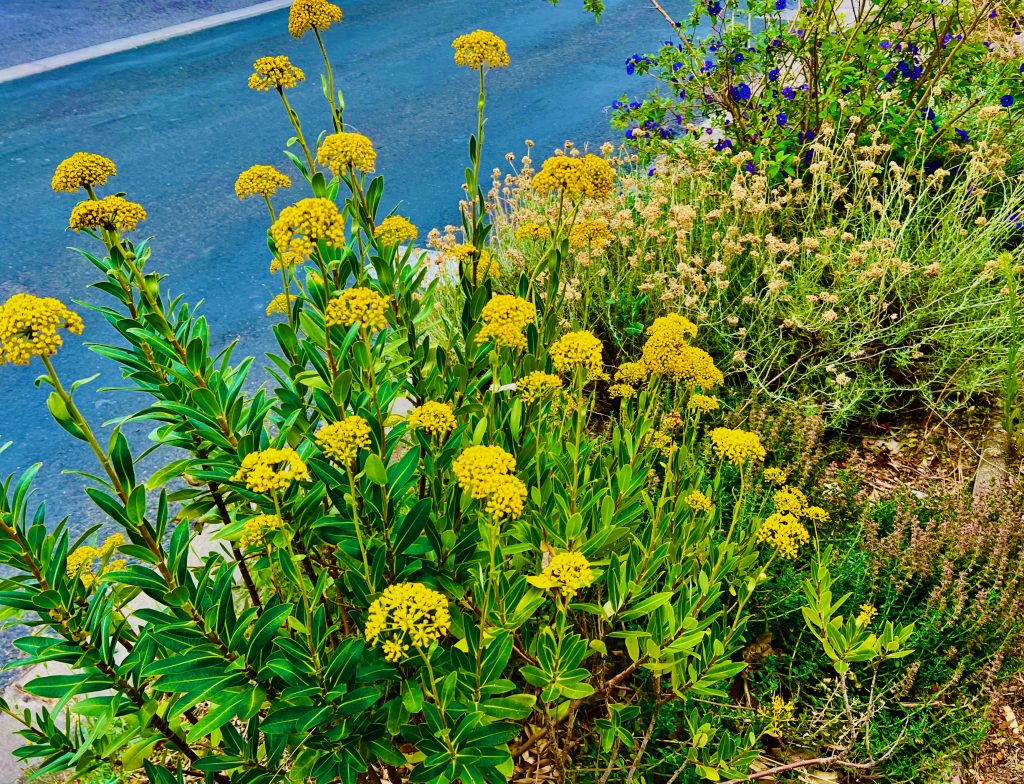
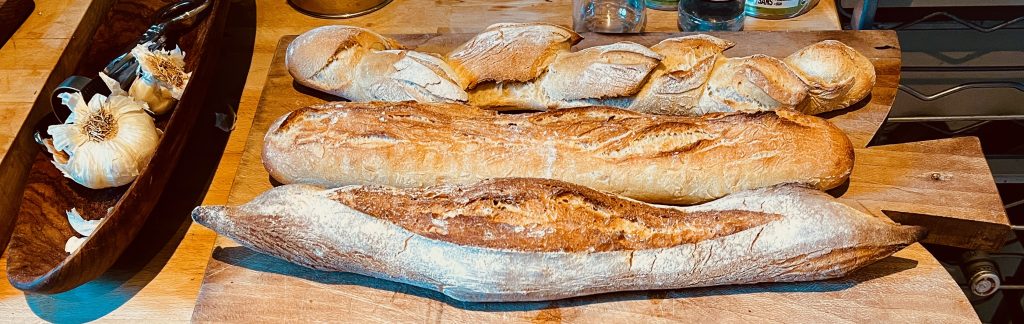
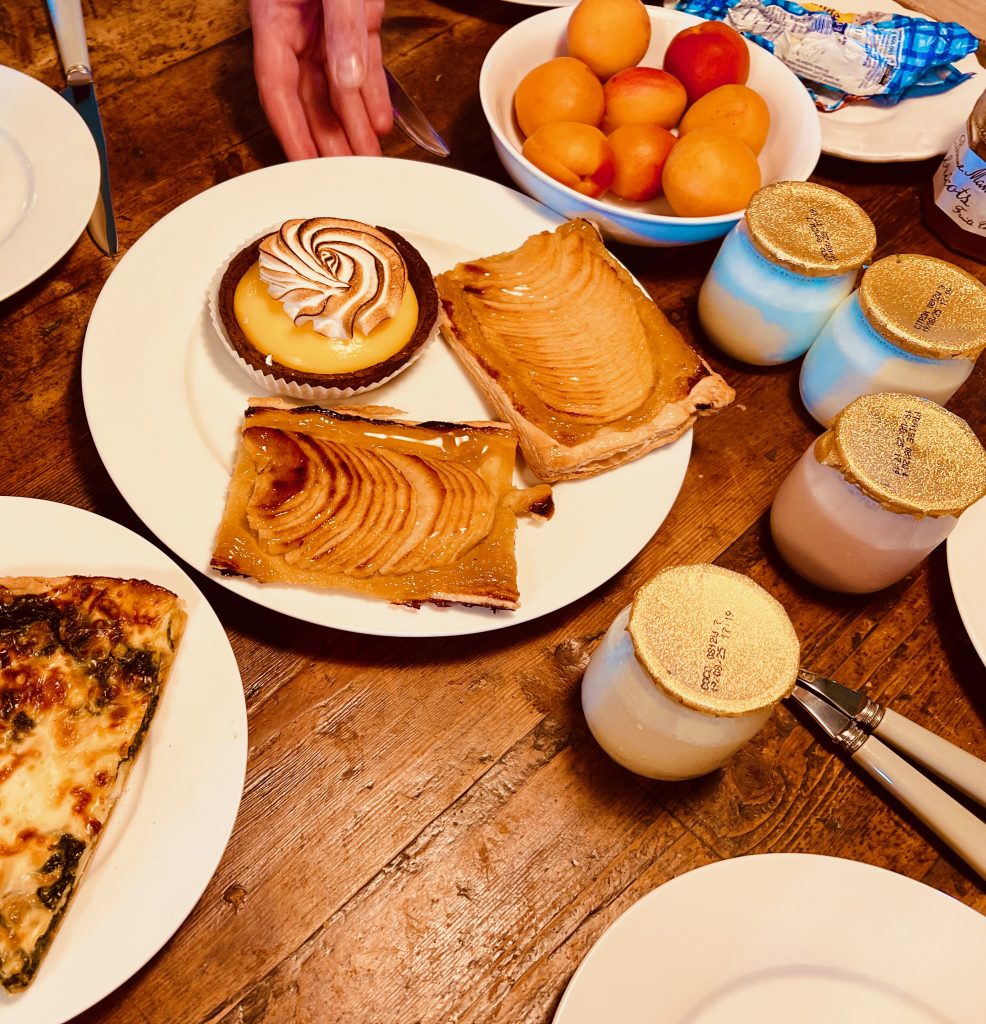
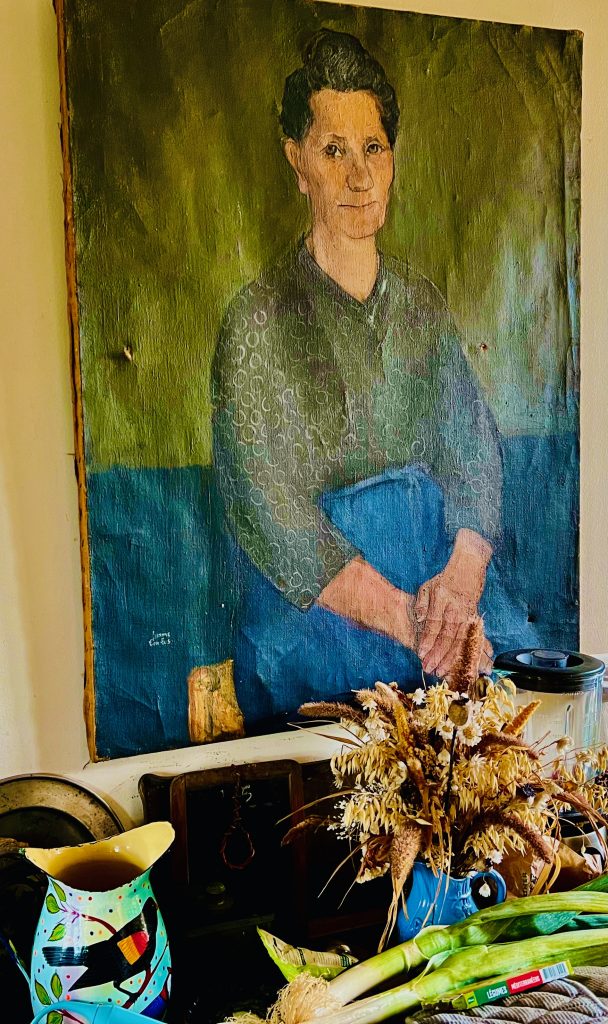
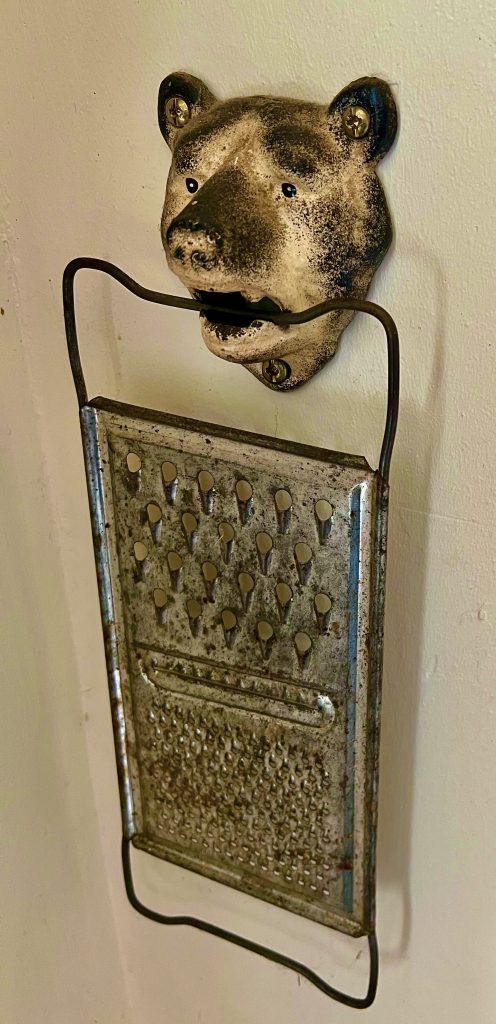
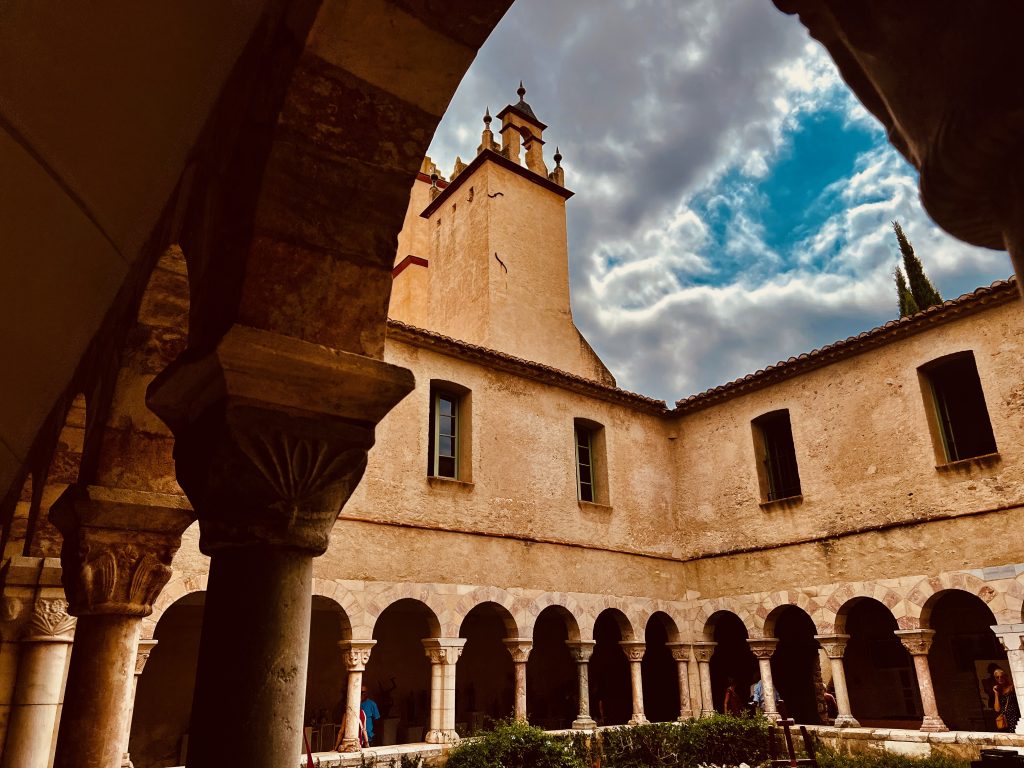
There’s a pool and beaches nearby. Also lots of summer art exhibitions. Saint-Génis is known for its Benedictine abbey, founded around 780, destroyed in the middle of the 9th century, then later reconstructed with magnificent cloisters, where various artists show their talents over the summer.
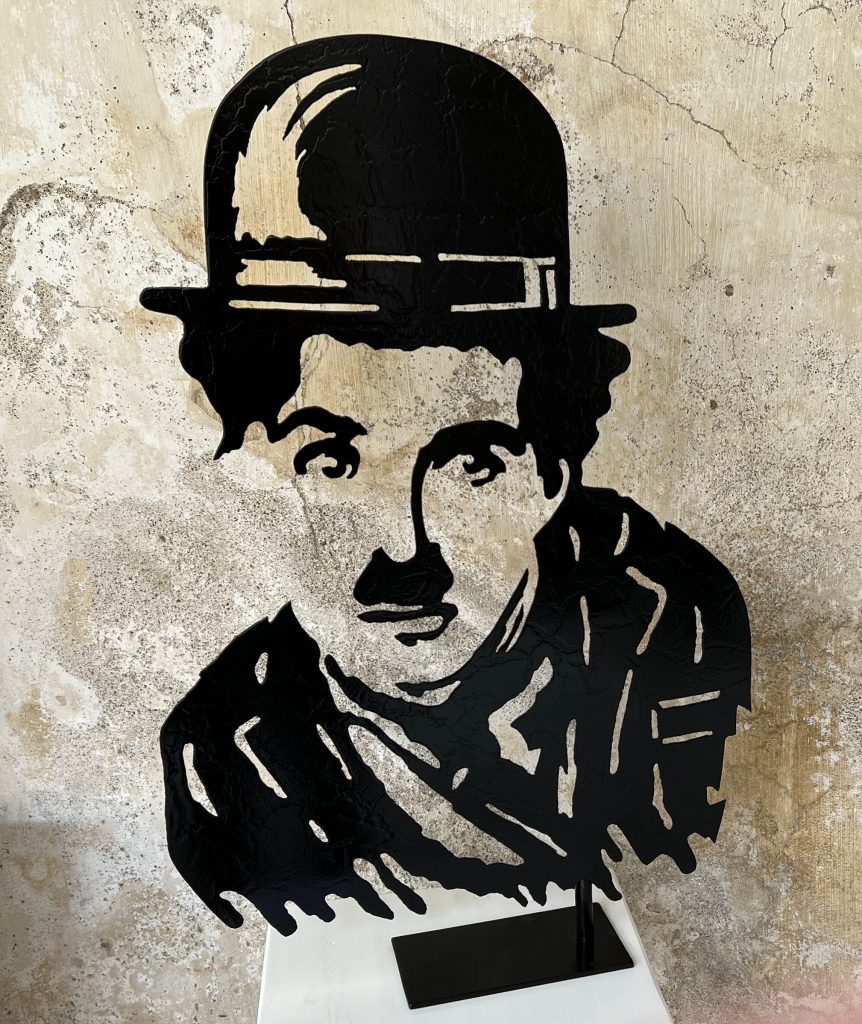
I was impressed with this ironwork sculpture but I would have needed to buy another seat on the plane to take it home!
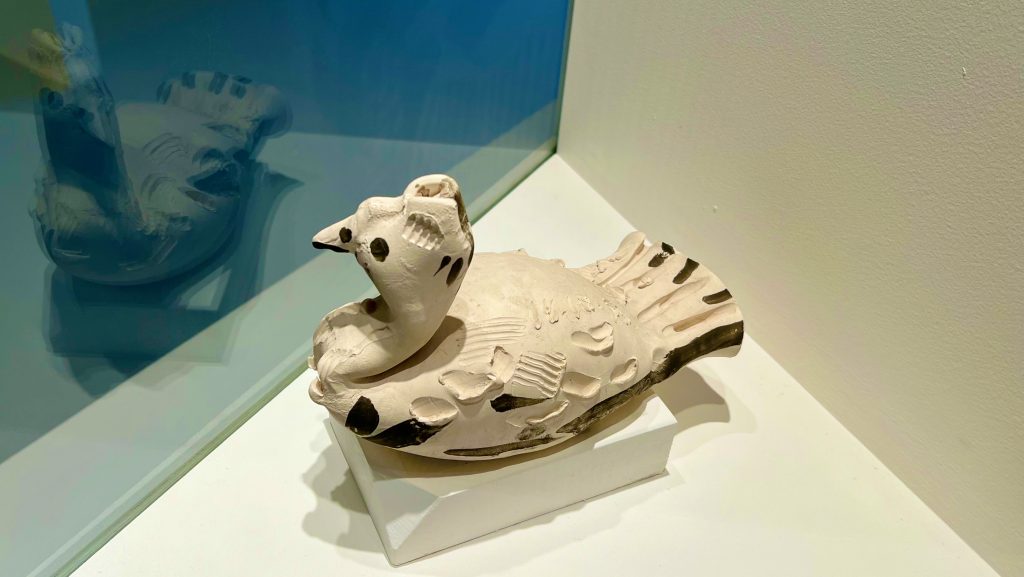
It’s almost time leave again already – back to reality. Taxi, train, plane – metro, boulot, dodo! But also the best memories – except for one – see below …
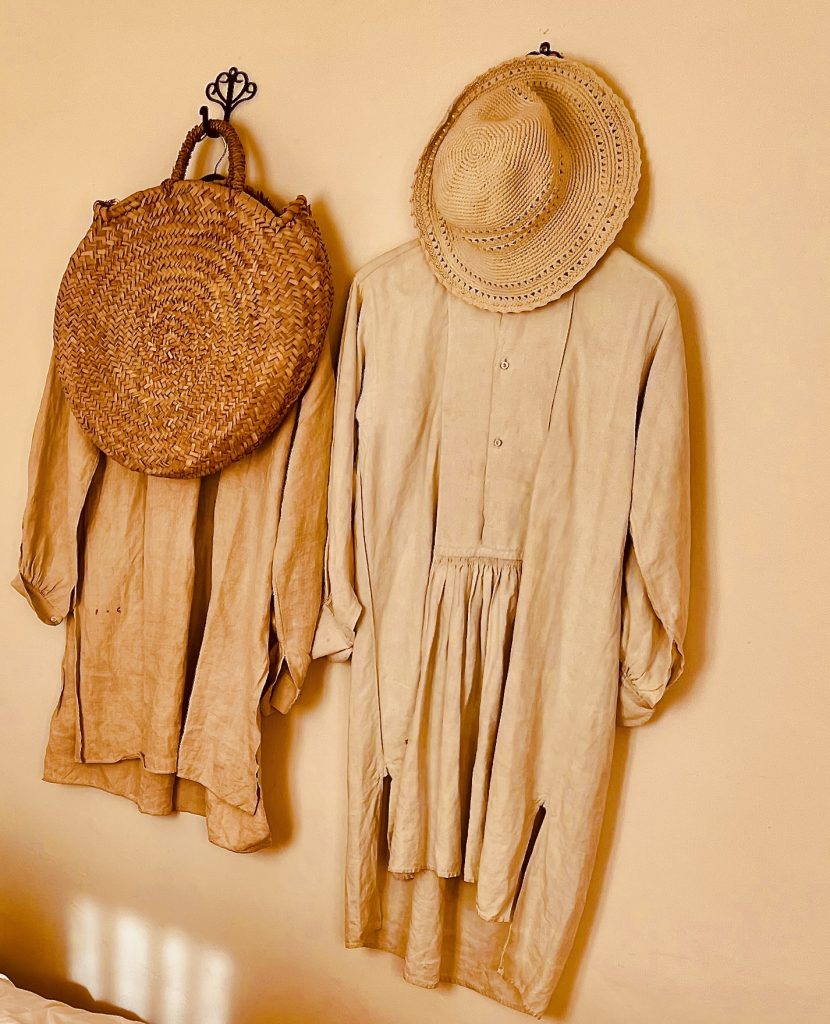
The others stayed behind for a day or two and were caught up in a huge wildfire which caused them to miss their plane. A horribly frightening experience, which is becoming more frequent because of climate change. This time they finally got home safely …
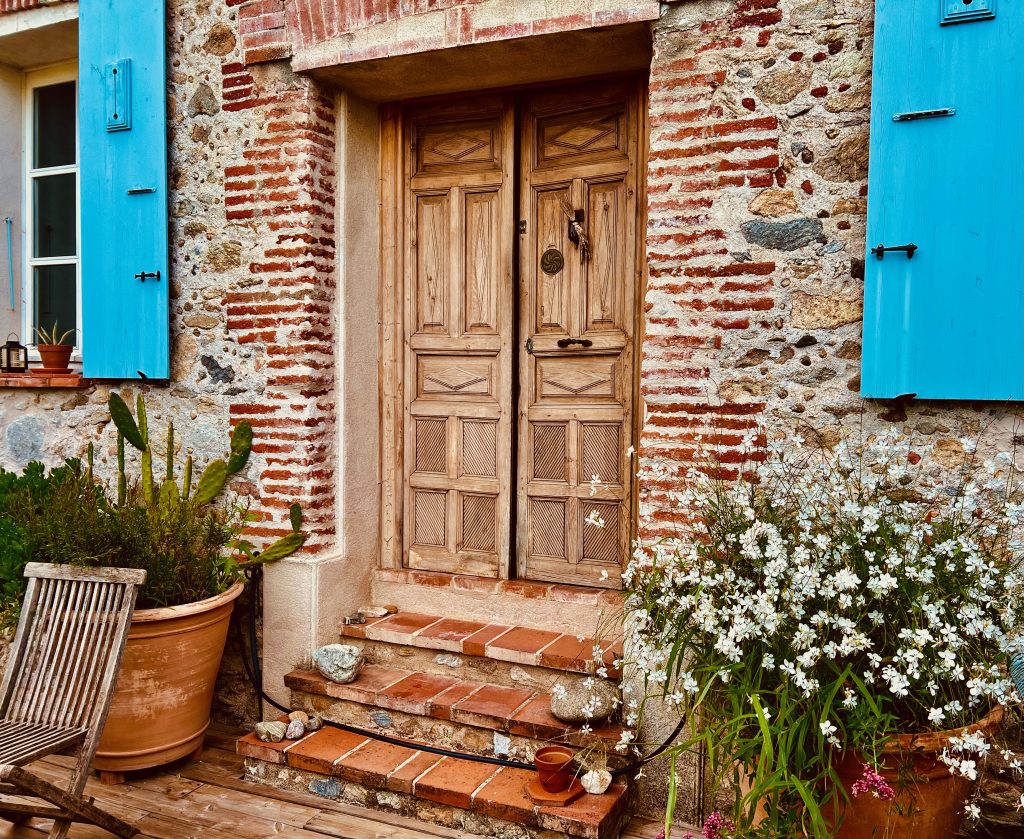
FIN